
Communication: Transparency is Key: Transparent and honest communication is key to building trust and overcoming challenges. By being transparent in my communication, I’ve gained the trust of my team members and have been able to navigate difficult situations effectively. I’ve been told that people admire my honesty. When our employees come to me for feedback, I’m someone who will always provide my true insights. I believe that being honest and transparent not only fosters open communication and strengthens relationships, but helps individuals grow and develop.
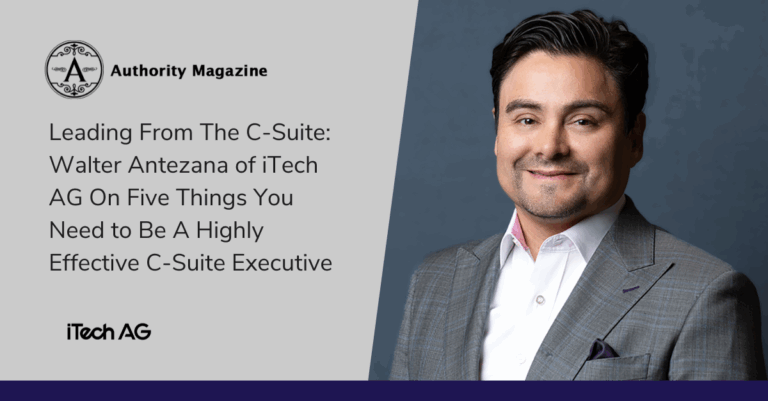
As part of our series called “Five Things You Need To Be A Highly Effective C-Suite Executive,” we had the pleasure of interviewing Walter Antezana.
Walter Antezana is co-founder and the current chief operating officer of iTech AG. He is an experienced managing partner with a demonstrated history of working in the government IT services industry. Through his strategic consulting experience and analytical skills, Walter has a passion for serving as a key partner to federal, state, and private organizations to help teams build customized IT solutions and drive technology innovation. He constantly builds upon a people-first culture at iTech AG, allowing teammates’ passions and careers to thrive. Walter established iTech AG with his brother Frank, building a quickly growing technology consulting firm thanks to their commitment to developing citizen-centered solutions to government challenges. He has held previous roles at Booz Allen Hamilton and other consulting firms, and he holds a bachelor’s degree in construction management engineering with a minor in business administration from California State University-Sacramento.
Thank you so much for joining us in this interview series. Before we dive into our discussion, our readers would love to “get to know you” a bit better. Can you share with us the backstory about what brought you to your specific career path?
My career started in construction management engineering and has evolved throughout the years. I started as an intern at a construction management company and quickly advanced within my career — my ability to cultivate strong relationships with clients truly propelled my success.
The management and business development aspects of construction eventually led me into the realm of government work at Booz Allen Hamilton, specifically in technology, software development, and program management. During this time, I realized the opportunity to offer similar services more efficiently and cost-effectively. Thus, the idea of starting my own company was born. I established iTech AG alongside my brother Frank and invaluable colleagues that I met along the way. These connections laid the foundation for our collaboration, emphasizing the importance of strong relationships in this dynamic industry.
Can you share the most interesting story that happened to you since you started your career?
Entrepreneurship has been ingrained in my mindset from the start. When I was young, I took part in ventures, including selling unique products such as jewelry made with bolivianite gemstone and alpaca scarves from my homeland, Bolivia, to fund my way through college. The drive to build something and turn a profit has always been instilled in me. I’ve never been one to sit still; my mind is constantly buzzing with ideas and opportunities. As I gained experience, I learned the importance of focus and prioritization. When we founded iTech AG, I had to concentrate on building a clear mission and vision, guiding our efforts towards a common goal. However, the one thing that resonated with me the most is the importance of fostering a supportive and empowering culture.
In some of my past roles, I often felt undervalued and overlooked, merely seen as a billable resource. This realization fueled my determination to create a workplace where recognition and engagement are paramount. At iTech AG, we’re more than just employees; we’re colleagues, partners in a shared mission. Based on my experiences, I aim to build a culture that revolves around recognition, empowerment, and engagement, ensuring that everyone feels valued and providing opportunities for individuals to grow and develop within the organization.
Can you please give us your favorite “Life Lesson Quote”? Do you have a story about how that was relevant in your life?
My favorite life lesson quote is the “platinum” rule, “Do unto others as they want you to do unto them.” Rather than treating others as I would like to be treated, I’ve learned to understand and respect their individual preferences and needs. This approach stems from recognizing that we all have unique personalities and communication styles. By learning and understanding someone’s character and preferences, I can establish meaningful connections and foster effective communication. I believe it’s important to have empathy and humility to be an effective leader.
Is there a particular book that made a significant impact on your leadership style? Can you share a story or an example of that?
A book that has made a significant impact on my leadership style is “The Platinum Rule: Discover the Four Basic Business Personalities and How They Can Lead You to Success.” This book explores the idea of treating others not just as you would like to be treated but rather as they would like to be treated. Though, having applied the teachings of this book early in my career to effectively communicate with clients and or potential clients, I’ve also used it to help reinforce good leadership skills through the years.
I learned that leadership is about understanding the personalities and characters of your employees to enhance communication, build stronger relationships, and achieve greater success together. Actively listening and striving to understand my employees to support them in their success has been a key takeaway from this book. For example, when team members bring something to my attention regarding their role, instead of dismissing their concerns or imposing my own perspective, I take the time to actively listen, empathize, and understand them. Then, we collaborate to make positive changes. By applying the principles of the Platinum Rule and actively listening to my team members, I have been able to foster a more supportive and inclusive work environment, ultimately driving greater engagement and success within the team.
In retrospect, there are many other good books that I can give credit to that helped me progress my leadership style. Ultimately, understanding your position and the impact you can have on others is what drives the effectiveness of a good leader. Always be humble and be grounded, regardless of your position. True leadership is not about flaunting power or wealth but remaining humble and focused on serving others.
What do you think makes your company stand out? Can you share a story?
iTech AG stands out significantly against our competitors and within the government technology industry due to the amount of emphasis our team places on workplace culture and employee satisfaction. Our employees are the ones who drive our success and it’s important for them to feel valued and appreciated to engage completely with their work.
We prioritize going above and beyond for our employees, whether they are on-site or remote, to ensure all members of our team know they are appreciated and valued. We do this in many ways, including constant team feedback, open communication, company-wide events, culture building activities and more.
Regarding our services, iTech AG’s work has a global impact — we support citizen leaders across the federal government and aim to spark change wherever possible. Our team enhances the customer experience through access to critical information, motivating federal organizations to better serve citizens, wherever and whenever
You are a successful business leader. Which three character traits do you think were most instrumental to your success? Can you please share a story or example for each?
Three character traits that I consider most instrumental to my success are persistence, being observant, and being personable.
Persistence has guided me through various challenges and opportunities in my career journey. From my early days selling jewelry to my leadership role at iTech AG, persistence has been instrumental in driving me forward. During my college years, I applied for an internship that I was deeply passionate about. Despite initially facing setbacks and being informed that the internship position had been filled, I remained optimistic. Determined to gain valuable experience, I took matters into my own hands. I printed out my resume and went to the site to speak with the project manager. There, I expressed my eagerness to learn and grow within the company, emphasizing my dedication to the opportunity regardless of financial compensation. Through persistence, I secured the internship on the spot. This experience taught me that persistence is rewarding and if you do not close the loop on your endeavors, then you weren’t persistent enough.
Being observant has also played a crucial role in my success, particularly understanding and connecting with others. As a leader, I recognize the importance of listening to others and being attuned to the needs, preferences, and dynamics of those around me. This trait has enabled me to build meaningful relationships, foster collaboration, and effectively lead teams towards shared goals. One notable instance where being observant and a good listener proved invaluable was during iTech AG’s cultural transformation. During this process, I openly communicated with our employees to gather insights about what kind of environment they needed to feel valued and supported. By engaging with our employees, we compiled new core values and company initiatives such as the “iSee You” initiative where team members are recognized for their above-and-beyond contributions.
Lastly, being personable has been instrumental in building meaningful connections and fostering positive relationships. Whether interacting with clients or colleagues, I strive to approach every interaction with warmth, empathy, and genuine interest. This personable approach has helped me establish rapport and trust, while enhancing team collaboration. Earlier in my career, when I was working at another consulting firm, a client expressed that they were going to reduce my team’s billable rate. With this news, I chose to demonstrate my value through action. Not only did I strive to deliver excellent work, but I also earned the trust and respect of the client. By being personable and building a relationship with the client, they recognized my worth and chose not to cut the budget. I learned that people perceive you based on your genuine character and the value you bring to the table, highlighting the importance of being personable.
Being persistent, observant, and personable are the key to ensuring our employees feel engaged and valued, while contributing to my success as a leader.
Leadership often entails making difficult decisions or hard choices between two apparently good paths. Can you share a story with us about a hard decision or choice you had to make as a leader?
When making hard decisions, I always strive to do what’s best for the people of the organization. I fear regretting missed opportunities; therefore, I make strategic decisions to avoid the haunting question of “what if.” Asking questions and engaging others helps guide me along the path to making tough decisions.
One challenging decision I had to make was the choice between staying in a comfortable position with good pay and slow progression or taking a risk to pursue my passion with the potential for greater long-term rewards. I embraced the belief of “if your dreams don’t scare you, then you’re not dreaming big enough,” taking the leap to begin developing my vision for iTech AG despite the uncertainty and fear of failure. Both paths presented good options, but I am grateful for having taken the risk, eliminating the lingering question of “what if.” As a leader, we have many difficult decisions to make, and I always consider what’s best for our employees and the business. But you must be willing to take the risk to see the reward. My experience has taught me to “dream it, do it, and become good at it” when choosing your future path.
Ok, thank you for that. Let’s now jump to the primary focus of our interview. Most of our readers — in fact, most people — think they have a pretty good idea of what a C-Suite executive does. But in just a few words can you explain what a C-Level executive does that is different from the responsibilities of other leaders?
For many employees, they are hired for a certain position within a department, and their priority is to focus on that department’s goals. While these do overlap with organizational goals, C-Suite executives are the leaders who are primarily responsible for coordinating department priorities to align with the company — we must have a much broader vision versus focusing on one aspect of the company. If the C-Suite fails to consider the entire company’s activity, he or she will not only fail the manager or the team, but the entire company.
C-suite leaders also play a role in ensuring employees and clients are happy with the work being done. Having that visionary mindset when viewing the organization and setting key goals with defined direction is essential.
In my role, I focus on building a thriving culture at iTech AG and work to go the extra step to empower our team members. A thriving work culture allows employees to grow professionally and motivates teams for success — human-centric companies are the most successful.
What are the “myths” that you would like to dispel about being a C-Suite executive? Can you explain what you mean?
One myth that I would like to dispel about being a C-Suite executive is the notion that you cannot talk to a C-Suite executive. The idea that C-Suite executives are inaccessible or unapproachable is simply not true. A healthy organizational culture fosters open communication and collaboration across all levels, including with C-Suite executives. I try to create an environment where employees feel comfortable to voice their concerns, share ideas, and engage with leadership, regardless of their position within the company.
It’s important to challenge these myths and promote a culture of transparency, accessibility, and recognition of other contributions to establish an effective organization.
What are the most common leadership mistakes you have seen C-Suite leaders make when they start leading a new team? What can be done to avoid those errors?
One of the most common mistakes I’ve observed C-Suite leaders make when they start leading a new team is failing to empower their team members adequately. As a leader, I prioritize building trust within the team and empowering them to make decisions and take ownership of their work. This can be achieved through clear communication, setting expectations, and providing support and resources as needed. Additionally, it’s about understanding each team member’s capabilities, preferences, and career aspirations to help them grow and develop within their role.
I believe that leaders should be willing to constantly “adopt & adapt” and evaluate to meet the evolving challenges and opportunities. By fostering a culture of empowerment, leaders can ensure that individuals are prepared and equipped to succeed in their leadership roles, driving organizational success and employee engagement.
In your experience, which aspect of running a company tends to be most underestimated? Can you explain or give an example?
Creating and maintaining a supportive company culture is the most underestimated aspect of running a company, as it is your employees and their hard work that will keep business afloat during difficult times.
To create a successful company culture, it’s imperative to establish a core set of values based on having employees be heard, recognized, and prioritized. By letting your employees know they are valued, this opens the door for two-way communication which plays an important role in company success. At iTech AG, I brought in people around me with a passion for and expertise in growing a culture that keeps people connected and engaged. These talented individuals led our cultural transformation and identified strong core values that help keep messaging, initiatives and priorities aligned while attracting and retaining top talent.
A strong culture is much more than weekly happy hour events with teammates and company outings — it’s essential that organizations have a comprehensive strategy based on values that employees support.
Ok super. Here is the main question of our interview. What are your “Five Things You Need To Be A Highly Effective C-Suite Executive”? If you can, please share a story or an example for each.
- Know your people: Effective C-Suite executives prioritize understanding the character and personalities of their team members. Building rapport fosters loyalty, respect, and trust. For instance, as a relator, I prioritize building relationships with my team members, which has led to a stronger sense of camaraderie and collaboration within our organization. One example of this was when we had a team member struggling with a project. By understanding their personality and what motivated them, I was able to offer personalized support and guidance, ultimately helping them overcome obstacles and succeed.
- Empower your people: Micromanaging stifles growth and innovation, so I empower my team by entrusting them with decision-making authority and being confident in their abilities. It requires a leader to know what motivates your employees. I strive to encourage collaboration across departments, allowing team members to take ownership of different initiatives.
- Don’t make decisions in a silo: Decision-making should not occur in isolation. Collaborating with the team and gathering diverse perspectives ensures informed decisions. For example, when planning internal events, we survey employees to understand their preferences to make our events inclusive and enjoyable for everyone.
- Communication: Transparency is Key: Transparent and honest communication is key to building trust and overcoming challenges. By being transparent in my communication, I’ve gained the trust of my team members and have been able to navigate difficult situations effectively. I’ve been told that people admire my honesty. When our employees come to me for feedback, I’m someone who will always provide my true insights. I believe that being honest and transparent not only fosters open communication and strengthens relationships, but helps individuals grow and develop.
- Listening: Actively listening to employees helps leaders gain valuable insights into their motivations and concerns, ultimately driving engagement and productivity. Listening is a very hard skill to learn but it ensures that no detail is overlooked and helps leaders understand what drives their employees. Early in my career, I expressed a desire to grow within my role, often seeking out opportunities. Unfortunately, my manager at the time wasn’t actively listening to my aspirations and concerns. Despite my efforts to communicate my goals, I didn’t feel heard, valued, or supported in my role. This experience highlighted the importance of active listening for leaders. By actively listening to employees, leaders can ensure that they are meeting team members’ needs and providing the necessary support for their success. It underscores the significance of creating a culture of open communication and empathy in the workplace, where employees feel valued, heard, and empowered to achieve their full potential.
In your opinion, what are a few ways that executives can help to create a fantastic work culture? Can you share a story or an example?
Listening to employee feedback and encouraging them to provide insights is a great way to step outside of your own perspective. One way that we worked to improve our company culture at iTech AG was by conducting a cultural transformation program.
With all employees engaged, we were able to design a culture that aligned with our employees’ values and priorities, creating a workplace they are proud to contribute to. As a result of this project, our team implemented several initiatives including:
- A monthly coffee status meeting where employees are encouraged to share professional and personal updates
- iSee You, a company-wide ritual where team members celebrate their colleagues for above-and-beyond contributions
- iTech Talk, a monthly session for team members to present on a topic they find interesting or educational that they would like to share with other team members
It’s critical for all employees to feel invested in their work culture and for our executive team to be committed to making it great. Leaders must lead by example and communicate the value of company decisions and requirements. By empowering our leaders to be champions of their people, we have created an open environment that continuously evolves.
You are a person of great influence. If you could start a movement that would bring the most amount of good to the most amount of people, what would that be? You never know what your idea can trigger.
If I were to start a movement, it would center around the concept of “Be Present.” In today’s digital age, where smartphones and constant connectivity dominate our lives, there is a pressing need to prioritize human interaction and living in the moment. This movement would emphasize the importance of prioritizing current happenings over distractions or future concerns.
Additionally, being present can enable us to spend more quality time with our families, friends, and colleagues. By encouraging individuals to engage more fully with their surroundings, we can foster stronger relationships, deeper connections, and a greater sense of fulfillment in our lives.
How can our readers further follow you online?
You can connect with me on LinkedIn to stay up to date on all things iTech AG or follow iTech AG’s LinkedIn or website.
Thank you for the time you spent sharing these fantastic insights. We wish you only continued success in your great work!
About the Interviewer: Douglas E. Noll, JD, MA was born nearly blind, crippled with club feet, partially deaf, and left-handed. He overcame all of these obstacles to become a successful civil trial lawyer. In 2000, he abandoned his law practice to become a peacemaker. His calling is to serve humanity, and he executes his calling at many levels. He is an award-winning author, teacher, and trainer. He is a highly experienced mediator. Doug’s work carries him from international work to helping people resolve deep interpersonal and ideological conflicts. Doug teaches his innovative de-escalation skill that calms any angry person in 90 seconds or less. With Laurel Kaufer, Doug founded Prison of Peace in 2009. The Prison of Peace project trains life and long terms incarcerated people to be powerful peacemakers and mediators. He has been deeply moved by inmates who have learned and applied deep, empathic listening skills, leadership skills, and problem-solving skills to reduce violence in their prison communities. Their dedication to learning, improving, and serving their communities motivates him to expand the principles of Prison of Peace so that every human wanting to learn the skills of peace may do so. Doug’s awards include California Lawyer Magazine Lawyer of the Year, Best Lawyers in America Lawyer of the Year, Purpose Prize Fellow, International Academy of Mediators Syd Leezak Award of Excellence, National Academy of Distinguished Neutrals Neutral of the Year. His four books have won a number of awards and commendations. Doug’s podcast, Listen With Leaders, is now accepting guests. Click on this link to learn more and apply.