
A ServiceNow release can be technically successful and still fall short of its intended impact.
The new capability may work as designed. Testing may be complete. The platform may be ready. But if users do not understand what changed, how it affects their work, or why they should use it, the organization may not realize the full value of the release.
That is why go-live should not be treated as the finish line. It is the point when technical delivery must translate into user adoption.
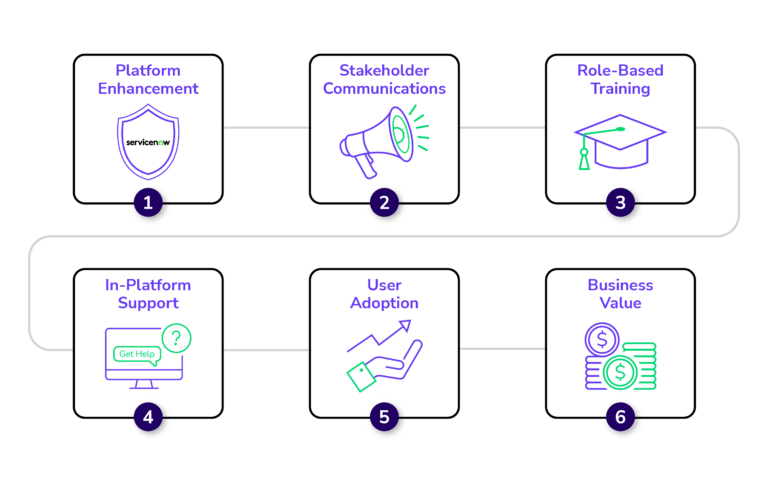
Start with the people affected by the change
Different stakeholder groups experience a ServiceNow release differently.
Executives may care about operational visibility and business value. Managers may need to understand how a workflow changes team responsibilities. Fulfillers may need detailed process guidance, while occasional users may only need to know how to complete one specific task.
Effective adoption begins by segmenting stakeholders according to their roles, needs, level of impact, and influence. For each audience, organizations should be able to answer four questions:
- What is changing?
- Why does it matter to this group?
- What does this audience need to do differently?
- What support will help them make the transition?
This prevents communications and training from becoming generic. It also helps teams focus their efforts on the audiences and behaviors most critical to the success of the release.
Treat release communications as a campaign
A single launch announcement is rarely enough to change behavior. Users need information before, during, and after a release.
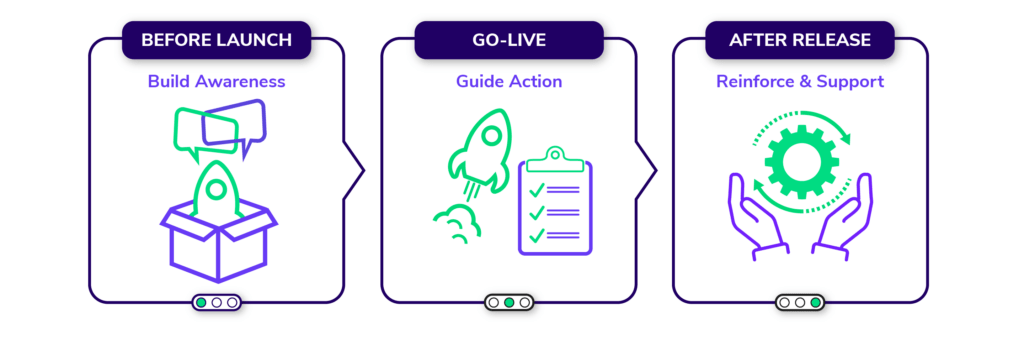
Before launch, communications should build awareness and explain why the change is happening. At go-live, users need clear instructions, links to resources, and a simple explanation of what to expect. After the release, follow-up communications can reinforce new behaviors, answer common questions, and highlight capabilities users may not have discovered.
Together, these touchpoints form a release campaign. Depending on the audience and scale of the change, that campaign may include:
- Leadership messages
- Email and intranet content
- Team briefings and office hours
- Short videos and demonstrations
- FAQs and quick-reference materials
- In-platform announcements and guidance
Each communication should use plain language and connect the enhancement to a real user or business need. Rather than leading with technical details, explain how the change can make a task easier, improve visibility, reduce manual effort, or create a better service experience.
Make training relevant to each role
Users are more likely to engage with training when it reflects the work they actually perform.
Long, general demonstrations can overwhelm people with information they may never need. Role-based microlearning offers a more practical approach. Short videos, focused demonstrations, and task-based modules can show each audience how to complete the actions most relevant to them.
Quick-reference guides and knowledge articles provide additional support when users need a reminder. ServiceNow Guided Tours can reinforce learning inside the platform by walking users through key tasks in context.
The goal is not to teach every user everything about the release. It is to give each person the information and support needed to confidently perform their role.
Build accessibility into every format
Adoption content is only effective when people can access and use it. Section 508 accessibility requirements should be considered during content planning, not added as a final compliance step.
Depending on the format, accessible content may include:
- Descriptive headings and a logical reading order
- Sufficient color contrast
- Alternative text for meaningful visuals
- Captions and transcripts for video
- Descriptive links
- Accessible tables and documents
- Keyboard-friendly digital interactions
Building these requirements into templates, production standards, and review processes helps teams create accessible materials consistently across releases.
Continue supporting users after launch
Go-live often creates new questions that could not be anticipated during planning. Users begin applying the capability to real work, managers see how the process operates across their teams, and support requests reveal where additional guidance may be needed.
Post-launch support can include office hours, targeted reminders, updated FAQs, new microlearning content, or refinements to in-platform guidance. These efforts help users move beyond initial awareness and build confidence over time.
Turn technical delivery into organizational value
ServiceNow can enable better workflows, visibility, and service experiences, but technology alone does not create change. People need to understand the value of new capabilities, feel prepared to use them, and receive support as their work evolves.
iTech AG helps organizations integrate stakeholder engagement, communications, role-based training, accessibility, and ongoing support into the ServiceNow release lifecycle. By planning for adoption from the beginning, organizations can move beyond launching new capabilities and begin realizing their intended value.
Preparing for a ServiceNow release or upgrade? Talk with iTech AG about building user adoption into your delivery strategy.